




API SP vs API SQ: Engine Oil Range Planning for Distributors
API SP and API SQ are gasoline engine oil performance categories, but a distributor range decision cannot be made from the category letters alone. Vehicle age, SAE viscosity, ILSAC designation, manufacturer requirements, license status and technical documents all affect the SKU plan.
This guide uses the American Petroleum Institute's current Motor Oil Guide as the standards reference. It is a procurement framework, not a replacement for an owner's manual, OEM specification or current product approval document.
What changed from API SP to API SQ?
API's Motor Oil Guide records API SP as introduced in May 2020 and API SQ as introduced in March 2025. API SQ adds requirements addressing both fresh- and aged-oil low-speed pre-ignition, together with improved timing-chain wear and high-temperature deposit protection and continued sludge and varnish control.
API SQ with Resource Conserving corresponds to ILSAC GF-7A and includes additional fuel-economy, emission-system, low-temperature pumpability and ethanol-fuel provisions described by API. A plain API category statement and an ILSAC or Resource Conserving statement should therefore be recorded separately in a distributor's product matrix.
Why can API SP still have a role in the range?
The current API guide lists API SP as current for 2025 and older automotive engines. A distributor does not need to remove every SP SKU solely because SQ has been introduced, especially where the installed vehicle population, customer specifications and lawful product labels still support demand.
At the same time, do not relabel or market an SP product as SQ. Each SKU's current license, label claim, viscosity and supporting documents must be verified independently before a catalogue, tender or sales sheet is updated.
Separate API category, viscosity and ILSAC mark
API states that the Starburst identifies ILSAC GF-7A oils and cannot be used for SAE 0W-16, while the Shield identifies ILSAC GF-7B and is limited to SAE 0W-16. This makes viscosity a required part of range planning rather than a secondary label detail.
For every proposed SKU, record the SAE grade, API category, ILSAC designation where applicable, vehicle segment, manufacturer requirements, current license evidence, TDS, MSDS and packaging claim. Missing fields should trigger a document request, not an assumption.
A practical distributor range-planning sequence
Build the transition around verified market demand and product evidence. A compact matrix makes overlaps, gaps and unsupported claims visible before new labels or inventory are approved.
- Map target vehicles by model year, engine type and manufacturer-required SAE grade.
- Separate established API SP demand from planned API SQ and ILSAC GF-7 introductions.
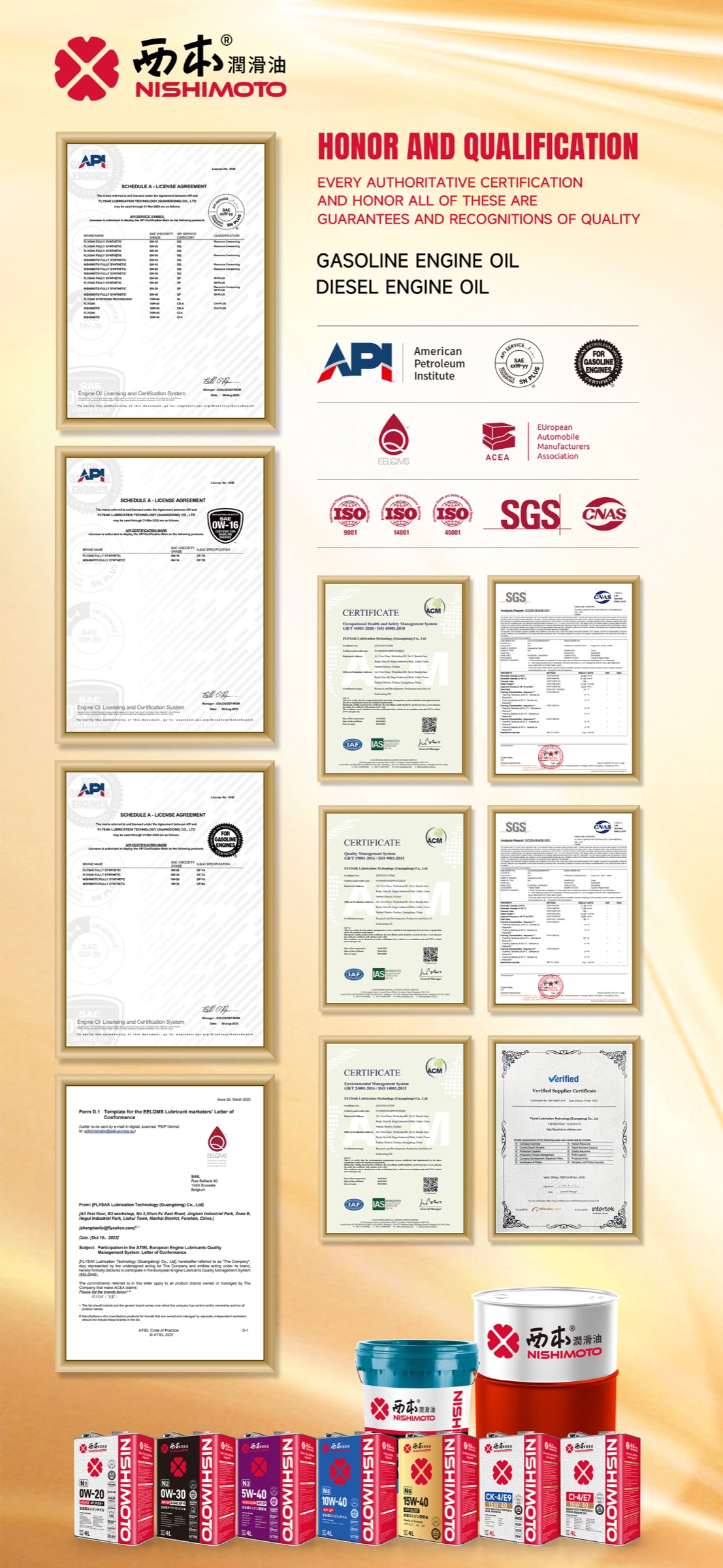
- Check each brand, product and viscosity in the current API EOLCS license directory when an API license claim is required.
- Collect the current TDS, MSDS and relevant quality or approval documents for every shortlisted SKU.
- Update labels, sales training and inventory transition rules without converting an older claim into a newer one.
How to review the NISHIMOTO gasoline engine oil range
Start with the NISHIMOTO gasoline engine oil category, then review the exact viscosity and stated performance information on each product page. The existing API SQ product update can help identify products for further review, while API SP product pages support comparison with established range requirements.
For a commercial decision, request the current product-specific TDS, MSDS and quality documentation. Product availability, packaging and licensing evidence should be confirmed for the exact inquiry rather than inferred from a general article.
Frequently asked questions
Does API SQ automatically replace API SP in every vehicle?
API describes SQ as the later gasoline category, but the vehicle manufacturer's required viscosity and performance level remain the primary selection reference.
Must a distributor remove all API SP products immediately?
No. API's current guide lists SP for 2025 and older engines. Range decisions should reflect verified vehicle demand, current labels, licenses and product documents.
Can ILSAC GF-7B be used for any viscosity grade?
No. API states that GF-7B and the Shield mark apply only to SAE 0W-16 oils.
How should an API license claim be verified?
Check the exact brand, product and viscosity in API's current EOLCS license directory and retain current product-specific documentation.